Showing posts sorted by relevance for query bartolo. Sort by date Show all posts

Tuesday, 9 August 2016

Barolo threeways in France - three producers and three vintages...

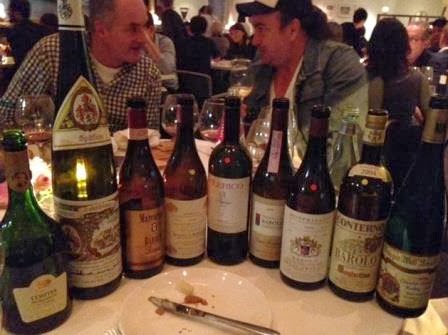
In the same vein as the last blog - Chablis 1er Cru Vaillons threeways - I took a few bottles of Barolo with me on holiday and decided that opening them all together was the way forward...
The trio di Barolo...
The three wines are ones I know well and that I buy every vintage:

Marcarini - is a slightly more commercial producer that the other two who could be classed as artisanal and cult in similar ways. All are traditional in terms of their non-use of new oak but there are differences too. Marcarini also makes a La Serra which, to me, is a little less structured but good.


Bartolo Mascarello - A producer whose wines I have loved for a while, old bottles can be variable but from 2005 I believe these are firmly at the top of the tree. The 2005 and 2008 being exceptional in vintages (especially 2005) where not everyone shone. The attitude is traditional in wood use but also the blending of vineyards (Cannubi - San Lorenzo , Rue and Rocche di La Morra - as per the label). Ken Vastola's site - www.finewinegeek.com - has a great section on Bartolo - info can be found here.

Cappellano - My experience is a little less here than the others but both the Pie Rupestris and Pie Franco are serious. Whenever I have had the wines I have found them to be powerfully poised and elegant as well as built to last. The same site as above has Cappellano info HERE. The Chinato is not to be overlooked if you can find it!

---


"Protocol" - all wines were cool and just opened and tasted (PNP = popped 'n' poured). Then double decanted (DD) before the second tasting and thereafter served from bottle nice and cool.


Barolo Brunate 2004, Marcarini


PNP - Clean, heady, slightly spiced nose with red fruits and some black backbone. Full, rich and intense. The palate is more structured and drier. Quite bold structure and good grip, nice tannins that are big but not hard, good length. Good wine.


Post DD + 2 hours - Still a little heady and hi-toned, good though. This is a wine that is not either young or mature and possibly suffers as a result. The tannins are certainly the boldest of the three. This is good, very good even, but not stacking up on pure quality with the other two.


20 hours after first opening - Holding up very well and whilst still a little "hi" it has a good balance of fruit and tannin with nice acidity. I think I'll try to leave the last bottles and a magnum of this that I have for at least 5 years, as I feel it will age very well and mellowness might be a good thing. 19/25.

Barolo Pie Rupestris 2008, Cappellano


PNP - Clean, more animal than the Marcarini. Richness? Yes, but also with lovely farmyard character but then more leather aromas, tea and lots of complexity. The fruit is nicely bruised in places, the acidity is more a feature of the wine than the tannin, which is there, but not overpowering. Nice start.


Post DD + 2 hours - Very good, somewhere between the other two in terms of profile, not the fruit purity of the Bartolo, not the tannin of the Marcarini. The sweet leather and tan element are superb, the fruit has tightened up a bit, clearly young but with an old soul. I like this, for the purists for sure.


20 hours after first opening - Lovely lifted nose, still on the leather side but also cured meats and saline, a serious wine that has good degraded sweetness and a great ability to age, I foresee this being a tertiary style of wine. Despite all these "animal" descriptors there is a red berry fruit lurking as well. Really lovely. 20-21+/25

Barolo 2009, Bartolo Mascarello


PNP - Such lovely poise, this has real precision and is more on the fruit than the others, there is a little spice there, the palate is a little softer and lighter but still true, this smacks of a tender attitude to a vintage that is not a blockbuster, good start.


Post DD + 2 hours - This saw comfortably the biggest change of the wines, the elegant but slightly scrawny, almost light red fruit has gone, replaced by a darker, sweeter and fuller character. I hate lazy analogies of red Burgundy but here's one coming; it is like a lesser vintage Volnay that has turned into a young Morey-Saint-Denis from a great year. The only possible criticism I might be able to make is that it is not so obviously Barolo. The wine is just a different animal post the double-decant and time.  

20 hours after first opening - The only wine to be tighter now than after DD+2hours, the nose is classy but a touch subdued, the extravagance of the second tasting has gone on the nose but there is a lovely rich tarry-ness to the palate with a good, marked acidity too. Somehow it is less of a showstopper now but more of a Barolo. 21-22/25


Conclusion: This was a really fun way to do things and I look forward to just drinking the last third of each later without making notes. The styles are different as well as the vintages. I will certainly continue to buy all three.

Sunday, 6 May 2012

Barolo 2008's a cracking tasting and nice surprise

Last Tuesday in the private dining room at Zucca I joined a small selection of merchants/brokers to taste through twenty 2008 Barolos (is it supposed to be Baroli?) hosted by my "Barolo Guru". I had been looking forward to this for some time. I am lucky to drink and buy a lot of great Barolo, and given the age-ability of the wine I am trying to buy as much as possible now whilst it still offers great value, but this was especially exciting as it was a vertical of several producers. As a bit of a precursor; the vintage had a reputation as a good but not great vintage, more delicate and classical than 2006, less flashy and more genuine than 2007. As ever the proof would be in the tasting. we tasted in flights of two or three wines, moving loosely from Barolo/La Morra to Castiglione Fallettto to Monforte and then Serralunga, but in places this changed to keep producers wines together.
So, to the tasting, and up first was Marcarini, a producer who's wines I follow personally. I have had great wines from the 1970's, especially Brunate '70 which is a gem, they appeared to lose their way in the 90's like quite a few producers but since 2004 they have been on great form.

1) Barolo La Serra, Marcarini - Very fresh, good very light red colour, raspberry and black pepper on the nose, floral, good structure, ripe and good tannins, lively, pretty and impressive. A good start and the sort of style I expected. 17 out of 20 (2014-2024)

2) Barolo Brunate, Marcarini - A little darker than La Serra as expected, a little closed on the nose, on the palate more masculine and savoury that La Serra, a sleeper, I like this, very Brunate, more muscular, good ripe, big tannins. 16.5-17.5 out of 20 (2016-2038)

The next producer - Francesco Rinaldi - is another that I have stared to follow having tasted the 2006's, there is no relation to Guiseppe (wines 6 & 7). Great to be able to compare so many Brunate's, a site I follow closely.

3) Barolo Brunate, Francesco Rinaldi - A pale but true colour, hint of brown, leather, spice, slightly oxidative style, malty and balsamic on the nose then the fruit comes through, complex and easy to misjudge, not for the Barolo newcomer, I'll buy this. 17-18 out of 20 (2015-2030)

Next reducer is Marengo, not one I know well, more modern in approach.

4) Barolo Brunate, Marengo - Lush, easy fruit, quite high toned, smooth clean finish, not my style but a good wine, a little too polished. 16-16.5 out of 20 (2014-2028)

Vietti are a big name in Barolo, they make good Barbera too. They are very good at ripe fruit but the approach to new oak is not to my style, I was looking forward to being proved wrong.

5) Barolo Brunate, Vietti - Focussed but slightly dump on the nose, classy nose, high toned and a little too polished, big but ripe tannins, for those that like this style this is impressive. 16-17 out of 20 (2016-2026)

Giuseppe Rinaldi is a legend in Barolo, and amongst the top three producers in my book, he is relatively little known outside the region and hardcore fans as he produces so little and like the great Burgundians the wines are snapped up by fans and disappear to be drunk by Barolo lovers later in life. He is very traditional in approach, old oak etc and also a believer in blending. Both wines he makes are a blend of two vineyards to get balance. This is a different approach from other ultra-traditional producers like Bartolo Mascarello (all vineyards into one wine) and Giacomo Conterno (2 single vineyard wines). Buy whatever you can find. So the wines...

6) Barolo Brunate Le Coste, Giuseppe Rinaldi - An instant step up in quality, brine and blackberry, bacon, liquorice, richness but so much fruit density, stunning frankly. Very true to the house style and proves this is a very fine vintage. 18-19 out of 20 (2018-2040)

7) Barolo Brunate Cannubi San Lorenzo, Giuseppe Rinaldi - more red fruited than the Brunate, sweet leather, good tannin but love the acidity, freshness and lift, serious quality. 18-18.5 out of 20 (2016-2034)

Brezza was next, not a producer I know well. You see their Barbera around a fair bit...

8) Barolo Bricco Sarmassa, Brezza - Really unfortunate to come between G.Rinaldi and Bartolo Mascarello, even so it showed well if not excitingly, very well made, integrated and balanced. 16-17 out of 20 (2014-2024)

Little needs be said about Bartolo Mascarello that hasn't been said before. Ultra-traditional, all vineyards blended to make one Barolo, very old oak. Maria Teresa now runs the show and arguably makes even better wines than her father. The results since 2004 or may be 2005 are great, superb.

9) Barolo, Bartolo Mascarello - On balance this probably just pipped the whole tasting for its seamless elegance and balance, feminine red fruit but lots of structure under it too, you could drink it now the balance is so good. 18-19.25 out of 20 (2016-2038)

Brovia have some how stayed a little under the radar. I always buy the Villero as it is arguably their best all round wine. I was delighted to get to taste the two below though because they show how well this house portrays the terroir. We are in Castiglione Fallettto now.

10) Barolo Rocche, Brovia - In its savoury nature there was a cord of connection between this and the Brunate from F.Rinaldi. It is for those that like fruit which is combined with earthy notes. A strange combination of brine notes and almost anchovy aroma was delicious to me. 17-18.25 out of 20 (2013-2032)


11) Barolo Ca' Mia, Brovia - Red black fruit is a contrast to the Rocche, this is more lush, sweeter fruited, couldn't be more interesting as a pair, more obviously appreciable may be, great stuff. 17 out of 20 (2013-2028)

The next wine was from Roberto Conterno of Giacomo Conterno and was a wine I took along purely for interest. Cerretta is a new holding for Roberto. From 1978-2007 Cascina Francia (bought in 1974) was the vineyard all their wines came from. This new acquisition which went through in June 2008 will see a Barolo in time, almost certainly from 2010. In the meantime the 2008 and 2009 will be released as Langhe Nebbiolo - 2008 after 2 years in Botti and 2009 after 3 years, ultimatley the Barolo will have 4 years as Cascina Francia does.

12) Langhe Nebbiolo Cerretta, Giacomo Conterno - I have tasted this several times and it always reminds me of Volnay as a "Barolo" very feminine but with structure, it will be a fascinating wine to follow. 17-17.5 out of (2014- 2024)

Elio Grasso is a more modern producer and not one I know well, I was excited to taste thought as I have seen good reviews. I struggled with them and would like to re-assess at some stage.

13) Barolo Gavarini Vigna Chiniera, Elio Grasso - The fruit was lifted and clear to see it just didn't make me think of Barolo and/or Nebbiolo at all, good wine but.... "16" out of 20 (2013-2027)

14) Barolo Ginestra Casa Mate, Elio Grasso - My note simply says "a bit blunt, not great", may be I need to re-taste but I didn't really see what the game was here. "15-16" out of 20 (2014-2024)

These were to be the very first Clerico wines I have tried, I tasted with an open mind as I have read good things of the estate but not of the 2008's from them.

15) Barolo Pajana, Domenico Clerico - The inital aroma was of violets but then there was a thinness on the palate, I found the wines, stripped and clumsy, like it had had the fruit taken away and too much extraction put in its place, disappointing. 13-14 out of 20 (2013-2020)

16) Barolo Ciabot mentin Ginestra, Domenico Clerico - Much better than the Pajana, decent if a little dried out by oak, strange lack of balance but at least it was Barolo. 15-16 out of 20 (2014-2014)

Fratelli Alessandria are based in Verduno (very north of Barolo as a whole region) and have holdings in the town's top Nebbiolo vineyard Monvigliero. I had not tasted any of their wines before.

17) Barolo Monvigliero, Fretti Alesandria - Arguably the most interesting of all the wines on show in that the style was very unique. A very old style of wine, a dash sherried and oxidative but in a good way. An almond and medicinal note on the nose, this is Barolo for those that love Islay Whisky (I do), fascinating, I might just have to buy a 6pack. 16-17.25 out of 20 (2013-2021)

Guido Porro is a producer I have a tiny bit of experience with, two bottles worth in fact. I bought a case of each of the two vineyards below but from the very different 2006 vintage. He is making a very pure and traditional clean style of Barolo with very fine aromatics and at a rather "bonkersly" low price!

18) Barolo Lazzariasco, Guido Porro - This is a very aromatic, lifted red and black fruited style, there is very good definition and focus, a good structure and much complexity...impressive, the character is similar to the 2006 (a good thing) but the structure a little more finessed (that's just the vintage). 17 out of 20 (2016-2030)

19) Barolo Santa Caterina, Guido Porro - Good again, a little more subdued than the Lazzariasco but as with that wine the DNA was the same as the 2006 I tried recently. 16.5 out of 20 (2014- 2030)

We had just two more wines sadly the Massolino was corked, you could kind of see a nice structure through it but nothing more, a shame. The very last wine was from Cappellano - a very very top producer who is totally uncompromising in when he releases his wines and also in the fact that he does not let his wine get reviewed/scored at all.

20) Barolo Margheria, Massolino (corked)

21) Barolo Pie Rupestris 2007, Cappellano - Very very impressive for having the fruit and full lushness of character that you get from 2007 but also a genuine structure and age-ablilty that make this a very classy wine. I had the 2004 of this recently and it was very classical but closed down, this is a producer to follow when you can find the wines. 17.5-18.25 out of 20 (2014-2030)

Overall impressions of 2008 and where it "fits":
I was very impressed by the wines, particularly the traditional ones, this is my preference but also I think this approach worked best with the vintage. There is a delicacy to these wines but many are also keepers, I think the run of vintages below are all worth buying (I have/will be) as they will be fascinating to watch over the next 20-30 years. Whether 2009 manages to include itself in this run will be interesting as it is reputed to be of less interest if very good for Barbera, we will see this time next year. 2010 however is thought to be of potentially legendary quality...very exciting. My personal ranking of the last five vintages is below from my varied experience of each vintage.

2004 - 19 - classic balanced, legendary potential.

2005 - 16-18 mixed with some very fine wines, very good in Barbaresco I hear.

2006 - 17.5-18.5 - very fine, masculine, balance the key.

2007 - 16-17.5 - showy and more forward, enjoyable if not profound.

2008 - 17-18 - very under-rated and like 06 very true if feminine to 06's masculine style.

A great tasting!

Saturday, 9 July 2016

The only people anywhere....

Yesterday's lunch at 67 Pall Mall had been in the diary for a little while and was always intended as a day ending luncheon. Mr Magnum, RMW and myself each produced a couple of bottles. Blind to a varied degree.

We started with Taittinger 1992 "Art Series" a wine I have heard of once but never experienced. A little more information can be found here - Taittinger Collection. The series was conceived in the late 1970s by Claude Taittinger. A long time lover of the arts. In 1983, Champagne Taittinger introduced the first rendition, a special bottle with a laser-sealed sheath that visually expresses the artist’s concept of the magic of Champagne. The artist in 1992 is Matta. The Taittinger Collection wines are released only in great vintages, from a selection of the year's finest cuvées. The wines are made from Chardonnay mainly from the Grands Crus of the Côte des Blancs, and Pinot Noir from Montagne de Reims and Vallée de la Marne. So it does not clash with the
 Comtes de Champagne Blanc de Blancs from the very same house. This was rich and incredibly vinous, a good, mellow but persistent mouse there was a toastiness as well as a savoury yeasty element with green apple acidity to stop it being too weighty. RMW set the tone with the phrase "if gold had a flavour then this is it"! What a unique start…

Time now for some white wine having ordered our food. Once we new what this was - Meursault Santenots 1er Cru 2000 from d'Angerville we reckoned that we were probably the only people anywhere having this combination of wines this year and we were only two bottles in…Served blind (although embarrassingly we had been told a few days earlier what it was but had lost the ability to recall it). There was a good stink of reduction at the start that made me think of serious Burgundy then as this passed and a richness of fruit came through I was was in the Rhone with rich aromatics. It then changed again and became far more mineral and stoney, like very good Chablis, clearly little or no new oak at all, delicious. The only other time I have had this as a mature wine was the 1990 during this dinner - Clos des Ducs 1920-2002. A real treat. 
Next - Vosne-Romanee 1er Cru Cuvee Duvault-Blochet 1999 from Domaine de la Romanee-Conti - served blind and it was a star from the moment it hit the glass and continued over 2 hours or more to excite and amaze. It is so glorious when a bottle sings it's very best tune - this was just in the moment. The DRC 1999's (and I am hideously biased) are supreme. This was so poised and fine but at the same time decadent with layer upon layer of fruit and delicate persistence revealing itself. A marvel and a very generous one. It is always special to have  bottle of this wine and this was the first "modern" vintage of it.
Now time for my pair - Barolo 2005, Bartolo Mascarello and Barolo Cascina Francia 2005, Giacomo Conterno - I have had these together a few times. I love how they both outperform the slightly tricky vintage and show two different sides of the traditional School. Conterno is about "single site" and Bartolo about blending sites. Neither is right or wrong. Again I have bias. The Bartolo is a rich more velvet textured and darkly fruited example, the Cascina a shade more driven and focussed, more savoury, less extrovert with that telltale salinity to the fore…they were fascinating to follow.
Then for what was supposed to be our last bottle, Poggio di Sotto Il Decennale 2001, essentially this is a Brunello Riserva that could not be name as such as it, in theory, did not have enough colour back at release time to be deemed a Riserva…what a load of nonsense. This must have gained colour, as if that was ever a good justification. A lovely, still rich but ready, wine with poise and a delicate bruised dark fruit aroma…lovely. Having had the Brunello normale in St.Emilion as well this is such an estate to watch (not that this is news).

It was Friday and not even 4pm yet so Mr Magnum decided, as he does, that another bottle was crucial. Not just any other bottle either, served nice and cool and growing in stature and depth the Musigny Vielles Vignes 2001 from de Vogue was quite something. The old adage of "the iron fist in a velvet glove" is a good one with this vintage now. There is a core of rich almost ferrous fruit and depth but with enough flesh to make this obviously a very fine bottle now. Delicious.

The UK may not be quite were we want it at the moment but with a lunch like this the world seems a better place…bravo chaps and thank you!

Friday, 31 January 2014

Barolo night at Zucca (just for a change)

A splendid bunch of chaps from a well-known Suffolk wine merchant (that’s all I’m saying) had been threatening a trip to Zucca for a while. Their passion (to an extent new found) for Barolo meant it had to be the wine theme.
We kicked off with a really lovely bottle of Tattinger Comte de Champagne 2002. I think this was the first time I have had it. It had a lemony focus but was very easy to drink. I would imagine a mag would have gone quickly, the bottle “evaporated” at speed. The only thing that surprised me about the Comte was the relatively high level of “sweetness”, it must have a decent dosage, either that of the vintage is just so expressive. It will be fascinating, and enjoyable, to see how it evolves over the years.
The six Barolos (I’m trying to give up on the phrase Baroli) were book-ended by Germans. The first was Maximin Grünhäuser Abtsberg Spätlese 2001 from magnum a very low, for Spatlese, alcohol of only 7%. The wine was good, nice but not more than that, a little “spread out” and loose, lacking focus. I feel I am being overly harsh bt it was just that a little bit of the zip had gone. Others who knew the wine from other bottles certainly suggested this.
So with the food coming at a good pace we were onto the Barolos in 3 pairs. First: Barolo Brunate 2004 from Marcarini and Barolo Santo Stefano 2004 from G.Mascarello. The Brunate was a slightly odd bottle, not so much faulty as just not a great one, I liked the sour cherry fruit to start but it did seem to "split" a bit, one diner noting it just showed too much alcohol. I have had the wine from magnum twice and both times it showed better than this. Not a disaster but a little outclassed by it's partner.  The Barolo Santo Stefano 2004 is a wine I have never had before, exciting, it is a lovely dense but elegant wine, it wasn’t showing masses but what it showed had focus and class, quite floral notes, very persistent. If you own it you have done well!
The next pair was a lovely contrast Barolo Pajana 1998 from D.Clerico and Barolo 1999 from Bartolo Mascarello. The former is a high toned very oaked wine, not a bad wine but just, to my mind , not a Nebbiolo and not a Barolo. The clean dense fruit is to be admired and when judged purely as a wine it is impressive. At 16 years of age though the oak is still quite separate from the wine and will become more so with air. What would it have been like with half the oak? We’ll never know but it’d be interesting were it possible to know. The Bartolo was the opposite "old school", starting to mature with a little bacon and savoury edge joining the gentle bruised red fruit, it was quite easy and approachable for a 1999, nice wine. 
Ridiculous expression but there we go...
The final pair was quite something Barolo Monprivato 2005 from G.Mascarello and  Barolo Monfortino 2004 from G.Conterno. The Monprivato was like a cross over between Barolo and Volnay, really lovely lifted elegant red fruits, very focused and streamlined. If you have this wine it is definitely worth having a bottle soon as it is a delightful. The Monfortino was decanted from 2.30pm-5.30pm then put back in the bottle. On opening it had been hard as nails, tight. It then opened up more and more without ever revealing the full array that will come with time and was there from barrel. One of less than a handful of the only wines I have ever given 20/20. It is a great wine and that’s that. The texture being wonderful now, if I owned some (sadly I don’t) then I’d look again in 6 or 7 years. 
One wine remained and it was a little gem that just bought everything back into focus - Graacher Himmelreich Auslese 1999, W.Schafer (8.5%) – a little spritz and still primary Riesling. I am a bit of a “cheap date” on Germans generally as I love Kabinetts but this was an example of a spot on Auslese.

There was a lot of good chat and many laughs…what’s the theme next time chaps?

Thursday, 2 October 2014

RHR - another epic!!

This was a brilliant luncheon organised by "Newcastle" who features often on this blog. "Halifax" had also contributed some bottles. So it was for the four of us to relax and enjoy a brilliant meal at the hands of Clare Smyth - Chef extraordinaire and Jan Konetzki - Sommelier extraordinaire.
The menu was exceptional and to pick a favourite course would be simply silly, though I did get tempted when looking at the gallery at the bottom. The large and well flavoured early season white truffles are not to be missed and added that unique aroma and flavour to several dishes.


Canapes
-
Steak tartare with Oscietra caviar
-
Scottish langoustine, handmade linguine and white truffle
-
Cornish turbot baked on the bone with seaweed, palourde clams, sea beet, wild chervil and charred spring cabbage
-
Smoked potato and poached egg ravioli with lightly roasted garlic emulsion and white truffle
-
Norfolk black leg chicken Albufera with "Ceps on toast"
-
Cote de Boeuf with smoked bone marrow, shallot sauce, rainbow chard and lovage
-
Cheese
-
Cucumber sorbet, salad burnet, lemon verbena and mint
-
Wild Strawberry custard tart with lemon balm, lavender and mascarpone sorbet


So what do you drink with that rather wonderful line-up? Well we started with Dom Perignon Oenotheque 1973 - having had the 1971 three years ago I was expecting quite a bit of weight, an almost coffeed richness but the 1973 is a music played at a lower volume with some mellowly tropical fruit and real moreish drinkability, not a chewy wine as some late disgorgements can be, it disappered quickly with the canapés.

The white wines were served as a blind pair. I had them about 5-7 years apart and I had the older one as Montrachet due to the richness and weight. They turned out to be 19 years apart and from the same site and same producer. The producer part is true but there is a sense of two different regimes about the wines. The wines were Chevalier-Montrachet 2002, Domaine Leflaive and Chevalier-Montrachet 1983, Domaine Leflaive. The difference is that the 1983 was made/overseen by Anne-Claude's father Vincent and the 2002 was Anne-Claude herself. The 1983 has an old school yeasty richness about it, more oxidative and a little wilder. Really very very good, a superb wine with the food. The 2002 is a marvel, so pure and clean, so bright and so youthful in colour, a wine which manages to have weight but in a very defined and feminine way, lots of minerality here. An absolutely fascinating pair.
From here is was red for a while! A half bottle of Vina Real 1959, CVNE followed as an intriguing interlude. I think I remember plumbing for Bordeaux but being tempted by Italy. there was a slightly vegetal edge but this was in good shape for its age. Bovril, beef stock, iron-rich blood and a little iodine all gave away elements of the maturity but there was a lovely saline edge too, very fun and staggering from a half.

We then had a pair of reds - Clos Saint-Denis 1996, Dujac and Barolo 2005, Bartolo Mascarello. The similarities between Barolo and Burgundy I think are more emotional and complexity/intrigue based than the actually style of the wines. These two made a good pair. The Dujac, was loose and quite sexy, I actually had it as Cote de Beaune (Lafarge I mentioned) and a fair bit older, mid 80's. There was a slightly grainy easiness about the wine. There was fresh red fruit to start, then more oranges and if anything it actually got younger as we drank it not older. I really enjoyed it - quite a "tart" of a wine but why the hell not. The Bartolo is the first bottle I have tried of this from my cellar. I buy the wine each year and there is a school of thought that this is one of the leading 2005 Barolo wines. This was very youthful in it's purity, very zippy and fresh, very red fruited, I was impressed but at the same time realise this was near infanticide. I never regret drinking a bottle young and this has a very bright future, if I had 12 bottles I'd look again in 2-3 years but as I have only five it'll be 5 years before I breach another.


From here we went to Bordeaux. I have had a very good run of Bordeaux recently and much as I realise there is a disgruntled Bordeaux buying public out there when the wines are "on" they are simply brilliant and that much not be forgotten. This was a blind magnum. We got to "serious left bank" quickly and knew there was some good age but I was then playing the man and had this as 1960's/1970's Latour. My note reads, letter for letter:


"Proper job, saline, delicious, some herbs, delicious, easy yet elegant, grainy grip. Just lovely, cep and truffle join in…yum...more please"

So what was it? Montrose 1959 in magnum, I was delighted by this as I really like the savouryness of Montrose and much as I was out on the year I do (quietly) pat myself on the back for the "proper" note as that's what I often say when I mean savoury complexity with fruit but not in-your-face fruit. It was just a great wine to drink, no edges but not simple, richness but not through alcohol. One more red appeared now and was a little different from what went before. It was Arietta H Block 2000 (or I think it was, no photo), this was all about the Cabernet Franc (100%), red crunchy fruit and a refreshing stalky (good "green") character but ripeness, would love to explore this estate more some time.
Croft 1955 - "odd" label
Cheese!! That means a proper bottle of port on these fine occasions, Jan got the port tongs out and did a mighty fine job. A look into the kitchen at this point was priceless, everything having a place and a process, prep well underway for dinner. As we tucked into the cheese the Port was slipping down a treat, clearly serious age, this was very mellow, elegant with a dash of white pepper, the bottle in question - Croft 1955 - a delight, refined power. If there is one quality wine style that modern life seems to have it "in" for then it has to be the fortified side of things. Port got me into this whole game and Madeira and Port still fascinate me (sherry never quite got me but it has many trade friends). Yet, so often these wines are not given the time they deserve. The great contradiction is that they are all making better wines now that ever...

After the cucumber sorbet - try it, it's amazing, though may be don't put it in your mouth in one go - we had a lovely elegant desert to accompany the Yquem 1948. It quite a grunty even savoury Yquem, a meditative wine, with good rancio character, the creme brûlée is intense with only a medium sweetness, there is a wild decadence about this vintage. I would imagine it is almost best drunk now, while the sweet and the savoury wrestle about with each other.

And from there…home…smiling…top wines…top food…top company…just lucky to be there.
They taste every bit as good as they look...
Now this could catch on...
If I had to choose? May be, just may be...
Turbo Turbot
Smoked potato and poached egg ravioli - brilliant dish
There's rather splendid chicken under the truffle!!
Only "Henry" (old post) ran this close...
Great cheese - Comte to die for...
Elegance
What a team...

Thursday, 4 March 2010

Barolo 1971.......


Last night was Barolo night at the Maltings Cafe http://www.maltingscafe.co.uk/ run by Sam Harris, Fraser and I met up with a whole collection (what is the collective adjective for wine merchants?) of guys from the trade to taste a selection of Barolo 1971's (& 3 Barbarescos) the tasting was hosted and organised by Eric Sabourin. For me as a Barolo fan this has been looming large in the diary for quite some time! 1971 is a great year for Barolo, up there with 1964, 1989 & 2004 at the very top of the tree.
The format was 6 pairs of wines with just some bread to keep the plate honest. We were asked to score out of 100 so I have included these below, I found scoring them difficult in because it feels strange to score wines of this age when you know that different bottles will show differently.

One observation from the moment I arrived was that the labeling (this is borderline geeky) is superb on these wines, varied but superb, you get a real sense of something special, far nicer than the dull minimalist so often found now. Whilst on the subject of labels what about the bottles….it appears there is no rhyme or reason to which bottle shape producers use and some producers, Giacomo Conterno for instance, uses the classic Albeisa (like Burgundy) bottle for Barbera and Cascina Franca and an almost Bordeaux bottle for Monfortino. This can be further confused by the fact that back when these wines were bottled it would not have been that uncommon for producers to go to their neighbours for bottles or vintage labels if they ran out, so you may find the “same” wine in two different bottle shapes…wonderfully Italian!!
All the wines were decanted at 5.30 and put back into bottles then tasted from 7.30 onwards, this is certainly the best option despite the fact that some wines might have faded as this allows you to check the wines and give them a chance to show best.

Barbaresco Rabaja Riserva - Prunotto (Pictured), nicely degraded nose, good now, savoury, nice start if not earthmoving (90).

Barbaresco - Giovanni Moresco, Moresco used to only make one wine, a blend of vineyards but has now sold to Gaja (you may see the names on the odd Gaja label), good wine, fully brown but with good acidity, impressive (94).

Barolo Marcenasco - Renato Ratti, a strange stink of degraded fruit, not sure it is a nose I like, palate big smokey and cigar box like, the 1978 is supposed to be better. Not for me but decent enough (87).

Barolo Riserva - Franco Fiorina, a soy-like nose, very dry palate that would be good with food but a touch hollow without, solid (89).

Barolo Brunate Riserva Speciale - Marcarini, a dash of Sercial Madeira about the nose but not a bad bottle at all, quite the opposite, this divided the tasters, I loved the tangy acidity (94). This backs up a bottle of 1970 I had last year, good value producer.

Barolo - Bartolo Mascarello, simply gorgeous, drinking perfectly, elegant and balanced, a “Volnay” of a Barolo, this wine is always a blend of many different vineyards in different villages in this case it sings (95). Keep an eye out for “anti” Berlusconi labels from the early 90’s, Mr Mascarello being a staunch Communist!

Barolo Bussia Riserva - Aldo Conterno, not a great bottle, a touch milky and a little too much tobacco for me, a shame (not scored).

Barbaresco Montefico - Giacosa, decent tangy nose, a little subdued but fruit is there under it all, a lot of sediment (89)

Barolo Rocche - Brovia, almost strawberry fruit, blind I would have ben in the 90’s!! Hints of toffee apple, unique in the tasting and remarkable if hard to rationalise as a 1971 (92+?).

Barolo Cappellano, I wrote “I like this, I really like this”, great balance, very complete (93).

Barolo Briacca Rocche - Vietti, almost perfect, gorgeously big with great balance, deliciously savoury, dense colour too (98).

Barolo - Giacomo Conterno, richer, more textured and structured than any of the others. The one wine that almost needed more time. A note of Bovril. Seriously good (97).

The tasting was followed by a selection of dishes Sam had prepared then the conversation flowed as the wines were finished up……

A memorable night with names to follow for the future, especially for me G.Conterno, Vietti, Bartolo Mascarello & Cappellano……Cheers Eric.

Sunday, 8 September 2013

Simply wonderful evening at Zucca

It has taken me a over a week to write up what was a brilliant evening of food and wine with friends on the last friday night in August. There was a slight feel that this was the last hurrah before proper work starts with the arrival of September, we certainly enjoyed ourselves.

A staggering menu was put together Zucca's Chef/owner Sam Harris and executed on night by Simon:
Broccoli, Squid and Pepper fritti
Antipasti
Tuna involtini, Cripsy Cavolo
Cauliflower, broad beans and hazelnuts
Mozzarella, speck and figs
Beef carpaccio, beetroot
Primi
Agnolotti in brodo
Vitello lasagne
Taglierini, rabbit ragu
Secondi
Grouse, trompette and pea shoots
Formaggio
Toma, pecorino sardo and gorgonzola dolce
Dolci
Pistachio tart, raspberry ripple ice cream
I have put pictures of a few of the courses at the bottom of this entry. There is no point me even trying to pick a favourite dish, they were all genuinely great in their own way.


Moving to the Wines the co-ordination had taken place before hand. The selection was a brilliantly balance and worked superbly with the food. Just one of those occasions when things clicked.
Perle 2006 from Ferrari kicked us off, 100% Chardonnay and focussed with a little toastiness, very balanced and just right as a palate primer. The second sparkler was a perfect foil for the Perle, Henriot Cuvee des Enchanteleurs 1998 was richer more dense, more serious, not over the top but with a sturdy core. The 1988 as a Pinot vintage is a bit of a star just as 1999 is for Blanc de Blancs, this was really good, serious, a Meursault-esque Champagne.
A magnum of Riesling Unendlich 2000 from FX Pichler was up next which had a lovely oiliness and a petrolly nose but stopped short of being Kerosine-like. It went with the Tuna and crab brilliantly and added to the very good impression I have of this producer from a bottle a few blogs back, I am not good on Austria but obviously should put in some work here!
Cervaro della Sala 2010 from magnum had a very well balanced nose with savoury toastiness but enough fruit, if it had been served blind I would have been tempted to say classily Californian it was really good and certainly not too young to drink though obviously has some legs. The third dry white was Corton-Charlemagne 1987, Bonneau du Martray, we managed to get though three bottles of this, two at this stage of proceedings and then another at cheese time. It's a cracking wine that confounds the lack of faith in white Burgundy but then the problems seem to be 1996 and onwards generally. It is everything you could expect from a difficult vintage but showed very well with a nutty unctuousness balanced by mineral vibrancy. All three bottles were identical.
The first of the reds was also a Burgundy, Chambolle-Musigny 1976 from Bouchard. This had a flinty, graphite like minerality on the nose which left after a minute or two in the glass then there was just a mass of dark fruit, kirsch and headiness, it was as though it was under screw cap, somehow lost in time. The fruit might have mellowed a little but there wasn't really much development or degradation to be seen, incredibly, a difficult vintage if for the opposite reasons to 1987, the 1976 vintage was hot, very hot and dry. With this brilliant "time capsule" tasted it was time for a truly tremendous run of eight Italians. There was a general pattern of Tuscany then Piedmont but as you'll see it changed towards the end.
Chianti Classico Riserva Vigna del Sorbo 1997, Fontodi was very pretty, in great shape, showing more refinement than many 1997's. Tignanello 1993 in magnum was delicious, mellow, totally ready and just one of those wines you love to drink without having to think too much, in bottle format I would imagine it may be fading but not in magnum.
Sassicaia 2000 also from magnum, was really delicious, sometimes in youth Sassicaia comes across to me as almost too serious and too savoury but this has found a lovely spot, it has that trademark bell pepper and savoury bite but the structure had just eased a tad to allow the wine to soften and become seriously inviting. Clearly this has years ahead of it but is lovely now.
Nebbiolo now took over with several rarities in the mix. First up was a lovely magnum of Barolo 1988 from Bartolo Mascarello which was a joy, slightly herbal, bricky, mellowing nicely. The structure has eased a little, I had this in bottle 5 or 6 years ago and as you'd expect this is tighter and arguably a little classier...delicious.
Two bottles of Barolo Riserva Voghera Brea 2000 from Azelia followed and showed a very different style of Nebbiolo, more richness and more toffeed notes, less class but then Bartolo is hard for anyone to live with. Azelia is a producer I should learn to know better.
Barolo Villero 1982 from Giacosa was next and for any lover of Piedmont there is something about the Giacosa wines from the 80's that is simply unmissable. An incredible balance is found between extreme elegance on the one hand and a persistent almost powerful guts on the other, it really doesn't get much better and especially when you are talking about a vintage that, for the top producers, is drinking brilliantly now. A tasting note is pretty pointless here.
A quick look back into tuscany now followed with Montevertine 1999, my notes are brief here but say; lovely rich fruit. I remember thinking it was young but at a great stage. One final red was left and Barbaresco Gallina di Neive 1985, Giacosa was an incredible note on which to finish the reds, what I said above about Giacosa from the 80's followed through well, this was a joy, I wouldn't dream to trying to say which I preferred of the two Giacosa's as that would harm both. There was deep fruit, black fruit almost, cherry too and then a lovely saline grip with the structure, obviously hitting fourth gear with fifth to follow soon, incredibly good.
The final bottle was the oldest of the night but in many ways was possibly the youngest tasting in comparison to its age. Bual Madeira 1969 from Blandy was exceptional, I love Madeira, this had walnuts, dates, Christmas cake and a whole load of power, sweet brown fruit character, one glass could have lasted for ages and the value in bottles of these is that you can drink almost a "dram" a night and just have the most fascinating complexity several times over...I need to get some.
Well, there we are then, a brilliant dinner that regardless of what the autumn has to hold will be one of the dinners of the year, great food, great wine, great chat...


Vitello lasagne
Beef carpaccio, beetroot
Agnolotti in brodo

Tuesday, 16 June 2015

"Foxes behind ears" - Piedmont 2015 - an Epic

Monforte d'Alba
As I hope I manage to portray, this was a fabulous trip. It was the encore to a similar excursion to  Burgundy last May. The aim was simply to introduce this band of vinous brothers - "Fiscali", "Very dusty bottles", '"Geronimo", "Raw" and  "Vestier" - to the joys of Piedmont and Piedmont wines. There had been a warm up dinner at Zucca which set the scene rather well. Events began on the Wednesday night "Chez Fiscali" with a nod to last year and a glimpse at May 2016's potential trip to the Rhone.


Dinner at "CG"
Bandol Rose 2013, Tempier
Ermitage “L’Ermite” 2001, Chapoutier
Condrieu De Poncins 2010, Francois Villard
Morey St Denis Clos Sorbe 2009, Francois Feuillet
Yquem 1999.

There are no notes on the wines here as I was, sadly, yet to join the party, a mistake I had made the previous year as well. The following morning at the airport we were complete - the full half dozen.

Air Fiscali
A couple of halves of Blanc de Blancs NV, Ruinart got us up and running on the flight, a sharpener to get the palate ready for what would be an onslaught on arrival. A quick transfer courtesy of Stefano, our driver for the next few days saw us arrive hungrily at:

Brezza Ristorante, in the town of Barolo itself. The set up here is engaging, un-fussy and authentic. They have a totally unpretentious restaurant serving really good local dishes. A hotel with good rooms (so I am told, ask for rooms on the second or third floor to get the view). Brezza is a far more serious producer than the restaurant and hotel set up would suggest. By this I mean normally if someone does all three there is a weak link. 
This lasted seconds!
The wines are all made by Enzo Brezza and his team, they are all traditionally made, no new oak. We just asked to be fed well and to get a good look at the range of the estates wines. I have bought several of the Barolos myself so a chance to look at pretty much the whole spread was really welcome.
Enzo!
Langhe Chardonnay 2013, Brezza - clean flavours, very pure and relatively light, no wood so minerals and lime in the main, nice.

Langhe Nebbiolo 2013, Brezza - This was not far from a rosé 
(they do make a rosé from 5% of their Barolo Cru holdings), very floral and linear, nice if simple.

Barbera d’Alba Superiore 2011, Brezza - A step up here, very good, nice fruit but not flabby, nice stoney freshness.


Barolo Sarmassa 2011, Brezza - This was very good, quite bold but nicely pure, tannins in good balance.
Amanda @ Brezza
Barolo Sarmassa 2007, Brezza - Following the 2011 with 2007, another quite similar vintage, was a good idea, this 2007 was more degraded and evolved as you would expect, easy to enjoy, as with a lot of the warmer vintages ('03,'07,'09,'11) it is best served cooler.   

Barolo 1965, Brezza - This was ordered in a lovely state of excitement. The chaps wanted to try something older, a nice "dusty bottle". We ordered the 1958 but Enzo himself felt the 1965 was a better bet, good level etc. The cork was a little stubborn but the wine was good and got better over the following 10-15 minutes, tightening up and getting younger. The signature, roses and tar.

Not bad for a first lunch...
Following this lunch and only running a few minutes behind for our next tasting we were really pleased to take up Enzo and Amanda's offer of a tour of the winery and cellars. It had been a great first taster of the region for the team. As we got into the wagon and asked Stefano to get us to Giulia Negri I had a feeling the trip might work out well.

Giulia Negri
Giulia has just finished her studies and university. She works from her families estate in the Serradenari Cru in Barolo, it is a great place to get a view over the whole region. Giulia is one of a younger generation of winemakers in the region who have traveled and who are fascinated by wines of other regions as well, especially Burgundy. We were treated to a cracking visit, a good tour of the winery, the cellar and then a great tasting sat out under the shade of a large tree. Giulia also seems to have a, very welcome, interest in the English sense of humour…with the team having lunched well this was a welcome discovery.
The wines:
Giulia has a fascination with Pinot Noir from her love of burgundy and she grows a little here, under the Italian name Pinot Nero, young vines.

Pinot Nero 2011 is a wine to drink now, there is a little menthol and a slightly split personality. The 2012 is a very clear step up, more lively, more precise and the 2013 has a bit more grip and tastes like it should, a translation between Pinot and Barolo. This is a project that is going to be exciting to track and now that Giulia is at the estate full time it will go from strength to strength.


The Barbera d’Alba 2013 is a juicy wine with more red fruit than black and a nice freshness. We were then into the Barolo's with the team relaxing in the breeze and many of the next batch of wines served blind. Barolo La Tartufaia 2010 is a serious wine with lovely richness, good extraction, a hint of leather and iron, this is for keeping. We then had two different versions of the Barolo 2011 from Giulia…one with the normal amount of Brunate in it and one less. The team were split on their preference, I found the version with Brunate to be bigger and a little more lush. There was on final wine - Renoir 2009 - thrown in as a curve ball, this is a blend of 60% Nebbiolo, 20% Barbera and 20% Pinto Nero. It is a wine her parents made (they still make wines under their own label from the same estate). It does very much taste of the region and we all liked it, as I had done a month earlier then I visited. There is fruit but also a degraded leathery element…
It had been a splendid afternoon - so many thanks to Giulia, the even better news was that she agreed to meet us for dinner on Saturday at Trattoria della Posta, more of which later...
It was time to drop our bags and check in at Hotel Casa Pavesi which is in the north of the Barolo region, in a commune called Grinzane Cavour. During the stay we were very well looked after by the team there. It is a nice location for accessing both Barolo and Barbaresco.

Before departing for dinner we gathered for a bottle of Delamotte 2007 Blanc de Blancs on the terrace, it is just starting to hit it's stride…

Trattoria La Coccinella
This was a little bit of a drive from the Hotel, 25 mins, but well worth it, once we got into the wines we were in the zone…we got a white from the region, Rolando Langhe Bianco 2013 from Bricco Maiolica, to accompany a white Burgundy that we had taken, Chassagne-Montrachet 1er Cru Les Macherelles 2012 from Francois Carillon.
Both these wines were enjoyable but the Chassagne's complexity won through, it's drinking well already though 18 months or so will do it well.
We then decided to follow the route we took with almost all ordering of food on the trip and said "please give us a mix of local starters, then two pastas and then we'll see how we are doing"…this worked well with both the restaurants, we were six people after all, and with us because we could concentrate on the wine! We got well tucked in here and ebbed and flowed between full maturity and youth.
Two of the great names...
Barbaresco 1971, Produttori del Barbaresco, kicked us off, the world's greatest co-op and a great vintage. I loved the fact that this was a medium weighted example of what classic aged Nebbiolo is - soy and frazzles, iron, some richness and a savoury acidity. From here I decided that we needed to get a few of the great names into the mix. Names we weren't seeing, may be next time! So Barolo 2009 from Bartolo Mascarello and Barolo Tre Tine 2010 from Guiseppe Rinaldi it was. The Bartolo had a juiciness and completeness, the Tre Tini was instantly a more masculine wine, more grip, a lovely purists structure, superb with the pasta. Then before we went back to the 70's it was time for Barolo Santo Stefano 2008 by Guiseppe Mascarello. I am a big fan of the 2008's a sort of feminine 2006 in so much as both are so very classical. This had a gorgeous, alluring and focused nose, a little more muted on the plate but splendid, what a trio of young wines.
A lovely line up for dinner...only day 1
Then "Dusty" and "Vestier" got hold of the list again and we were back in the decade of most of our births with the Barbaresco Rabaja 1974, Produttori del Barbaresco. Along with 1971 and 1978 the most lauded of that decades vintages (quick note if you ever see the Barbaresco 1970 from Produttori, buy, buy, buy). This 1974 was bricky and gritty with lovely acidity, exactly what is should be. We then had the Barolo Vigna Rocche 1989 from a producer I'd not heard of Sordo Giovanni. My notes by this time are thin on the ground but this did show well if not excitingly. The lists we saw generally had a lack of 1980's and 1990's. I am not totally sure why, may be those wines have been sold recently or is it to do with the modernist vs traditionalist saga that went on around the time. Either way we were having a ball and being looked after very well, certainly classed as the "crazy English". I later discovered our "little" line -up made it onto Facebook rather promptly under the title "we had the English in".
Quite some wine...

Just one last bottle to make the winding road home easier. What I hadn't realised was that it was only 4.5% alcohol. But when that wine is Tokaji Esszencia 1993 from Chateau Pajzos you don't care, believe me. Had I heard of it before? Nope, I should have though. When I tell you my note is long and that is at the end of a long day of lots of bottles you get the idea. My note sounds like one of those awfully pretentious monologues but here it is: "Thinly, very thinly cut apples on the nose, then with the palate is like the most sublime but substantial apple puree served cold. Long, Long, Long, I would struggle to say this was from grapes, extra-ordinary as it is extraordinary". And with that and a good group pic we were off. I'll be going back for sure.

On the drive back to the hotel there were mutterings of a running party organising themselves for the morning…those of us less that way inclined were thinking "yeah right"...

We woke to have breakfast on the terrace to find two of the team made it out for that run…good work. This daily tactic and the fact that the food is more easily digested than last years Foie Gras and reduction sauces was already making sense…

View from the breakfast table...
Stefano was ready at the wagon and the sun was out again, we were supposed to get rained on almost every one of the four days but thankfully nothing materialised.

So we headed to Bruno Giacosa where we were greeted by Francesco who gave us a tour of the facilities and a talk through the winemaking philosophy. We then sat down for a tasting with a group of Swedish journalists. Francesco gave us a overview of the history of Giacosa - Estate and Negociant. The total production is in the region of 300,000 bottles a year.


We kicked off the tasting with:

Spumante 2007 this is 100% Pinot Noir, Bruno Giacosa is no fan of Chardonnay, and has been made since 1983, it sells especially well domestically and in Germany. The nose is of dry nutty savoury fruit, the palate is then very mineral and again nutty. This was from a March 2014 disgorgement.  


Roero Arneis 2014 was up next, this comes from 21 or 22 growers and is amazingly responsible for 100,000 of the 300,000 bottles produced here. It is a wine I have had before but not in this vintage. The nose is pears and clean fruits, the palate has a little sweetness and is in balance with the nose, nice wine.

Barbera d’Alba Falletto 2012 has a production of about 7000 bottles and ferments for about 15 days at 26/27 degrees. There is a lovely dark cherry vivacity to this wine, not light but not weighty, I really liked this.

Now it was time to shift up a notch to the noble grape, Raw found this simply to exciting and managed somehow to break his tasting glass into a million pieces, a feat I am unlikely ever to witness again.


Nebbiolo d’Alba 2013 - had a lovely animal edge, then strawberry fruit, roses and some spice. I can imagine if aged this would take on a bit of truffle and gentle tobacco. I had a case of the 2008 (long since drunk) that did exactly that. They have made this since the 1970's and make around 14,000 bottles.

Barbaresco Santo Stefano 2011 is the last vintage of this wine that has been made since 1964. The fruit is again strawberry but wild rather than normal (sorry chaps but this stays in!), the acidity is superb, the wine is open and approachable now but I can well imagine it may go into it's shell. Very good indeed.

It was before the next wine that our Swedish journalist friends introduced us to the "a fox behind the ear" phrase, which I am sure you'll agree loses quite a lot in translation. It is suppose to suggest that some one has a lot of energetic drive...


Barbaresco Asili 2012 was a treat, I love this site, there is a darker fruit and always a moderate salty tang, this was a good showing from what is reputed to have been a tricky vintage.

Barolo Falletto 2011 was the final wine and as with the Santo Stefano 2011 it was vibrant and open and easy to appreciate. Cool strawberry conserve (not "Jam" Geronimo) that is so persistent. At the moment this is engaging pure and extrovert, so much complexity to come.

A really great start to the day and many thanks to Francesco for his time and knowledge. From Barbaresco we galloped of to Castiglione Falletto to meet up with Luca Roagna.

Luca breaks down the soil.
It was a real privilege to get a visit here as Luca, who I have known a while, really doesn't "do" visits as there is so much to be done at the estate. Roagna is a name most famous for wonderful holdings in Barbaresco, and some of the very best they are too. But Luca also has a very fine holding in Pira in Barolo as well. The wines for each can't be made at one place as each of Barolo and Barbaresco must both be vinified in their respective regions. The one exception is a historical one, Giacosa where we had just been.
To say that Luca has energy is a crazy understatement, he is a ball of energy. He is also deeply routed in the history and family nature of this great estate. At the same time he is a wine lover with a fascination for all the great wines. You will see all the great names around the cellars. Encouragingly most of the bottles appear to be empty! 
Looking down over Pira.
There is very long ageing of the wines at Roagna before they are released. They are not people to be rushed. We started our visit in the vineyards and this was no token "there you are a few vines to see", Luca had us going round the whole site, feeling and smelling soils and feeling the humidity of the vineyard floor (with the back of your hand not the front!). We saw the incredible vegetation that is allowed to grow up amongst the vines, everything is done here to be at one with the cycles of nature. The site is a steep one as we all realised when we we tried to clamber back up to the winery.
And what a winery it is! Amazing facilities, there is a sense of the Bond Villain about it but not in a showy way, everything has a place and reason for being there. Luca was picking up a few bottles as he went which was encouraging in the extreme. We then found ourselves popping out in Luca's own kitchen.

The tasting that followed was a joy. Zalto Nebbiolo glasses and every last detail covered. The wines were all from the last release, it sounds like the next release will be November.


Barolo Pira Vecchie Viti 2009 - From the vineyard we had trekked around, the old vine selection as well. A focused and persistent nose, pine resin and some iron as well as fruit that I can't really describe. A big structure but a balanced one. Superb.

Barbaresco Asili Vecchie Viti 2009 - Luca was slightly disappointed with this bottle and on reflection it was a little flatter than the others, still good though.

Barbaresco Montefico Vecchie Viti 2009 - They only have 0.24 hectares here that they got in 1929. There is an airiness about this, cool, wet rocks but also pure fruit, it manages to be charming but very serious at the same time!

Barbaresco Paje Vecchie Viti 2009 - Roagna are most famous for there holdings in Paje from which this and the next wine both come. This was a delight, a slight notes of iodine then stones and that trade mark purity. Fabulous.

Barbaresco Crichet Paje 2005 - the signature wine of the estate but made in such tiny quantities and certainly not every year. The family bough in Paje in 1953. This, when made, is from one dedicated plot. Sublime elegance, my note is useless as it pretty much just says "wow" - how a wine has this grace at the same time as a massive yet totally balanced structure I really don't know.
What a tasting!
Ever thoughtful Luca wanted us to finish with a white wine so we would leave with a clean palate, I was totally happy to be left with the finish of the Crichet Paje on my senses.

The Solea 2012 which Luca served was an absolute gem, with normal modesty Luca said he doesn't really make white wine but this would be ok, it was delicious. The wine is a blend of Nebbiolo and Chardonnay, only 1332 bottles were produced. There is a roundness and opulence to the wine but it is not without acidity, it's pretty unique I felt…we were sad to leave Roagna but Lunch was needed. Thank you Luca!  
I was excited about lunch as it was going to be at a place I had been recommended by several friends in the trade, Vinoteca Centro Storico in Serralunga d'Alba. Alessio is quite a character and the wine list is terrific as well as there being awesome hams to feast on. We had an outside table and put ourselves in Allesio's hands for a mix of starters and then some Pasta. We were not to be disappointed! With a big tasting at 3pm we went relatively easy on the wines and tried three producers we had not yet sampled on the trip.
Barbaresco 2005 from Gaja, this had a lovely open nose on first tasting and had purity as well as a slightly earthy aspect. As the wine had time in glass it got tighter and drier…I think just a case of the wrong time to be drinking this.
Barolo Lazzarito 2007 from Vietti was almost the opposite, a little closed initially with oak showing but it sweetened up and became less oak dominated with time - it was quite juicy and opulent by the end but did not show any hotness from the vintage, nice. 
Barolo Riserva Vignolo 2005 from Cavallotto was the final wine of lunch and this was a pre-cursor to the following mornings visit to the estate. One of Cavallotto's two Riservas. The wine was lovely, bright and elegant with a lovely structure. With the 3pm tasting being one we were not going to be late for we made prompt tracks from Centro Storico - I'll be going back.

So then it was time for my favourite estate any where in the world - Cantina Giacomo Conterno and having only been a month earlier made me no less excited. Roberto and his assistant Stephanie greeted us and gave the team the tour of the newly expanded winery as well as the brand new, wasn't there the month before, bottling line. I can't stress the level of "attention to detail" here but somehow it is done without there being any less character or emotion.
Barbera masterclass...
Then it was time to taste - and a very generous tasting too. The two 2013 Barberas -  "Francia" and "Cerretta" started us off with the textbook differences coming through, minerality and salinity with cool black fruit for the Francia and the more lush and red/black sweeter fruit of the Cerretta. When one of the team asked about the ageing of these wines Roberto asked if we would like to taste the "Francia" Barbera 2005 or the 2001. I think we settled on 2005 only for Roberto to bring both. "Why choose when you can have both" he kindly commented. This was fascinating. I have some 2008's at home and they are gorgeous but I think this is the oldest I have had Francia Barbera. The 2005 had some soy, it was quite decadent, a little chocolate, slightly sweaty, sweet and degrading good. The 2001 was in the next stage of development, a more faded colour, ferrous, saline, forest floor and some raisins and soy, nice and good to drink but without the freshness of the 2005.
Roberto explains...

From that mini Barbera master class it was Barolo time.  
Barolo "Francia" 2011 is to be bottled in June and the "would have been Monfortino" barrel has now been blended into the wine. This is staggeringly lovely, the purity of a Volnay with the underlying structure you expect, simply lovely. Barolo "Cerretta" 2011 is also to be bottled in June. Has a similar clarity of flavour, more fruit more opulence, this is extrovert and where the Barolo classicist may "prefer" Francia (and I do by a tiny margin) this is just so juicy and good. Barolo Monfortino 2008 has been bottled, last June, but it is being released this year. I find this wine almost indescribable. There is a refined sweetness but also leather and some sweet tobacco but at the same time and, almost in contradiction, there is something so refined and feminine, just marvelous. The last wine - Barolo Monfortino 2010 - has only two problems. Firstly, the expectation is insane because as anyone who has tasted it will tell you this is the soul of what Barolo should be. As a result the expectation of experience will always be insanely, possibly unfairly, high. Secondly, when on earth do you drink it? My temptation is to say every 5 years from 12 years of age. It has everything and my words certainly can not do it justice - I am pathetically biased but I challenge anyone to disagree.

And well over two hours after arriving we headed to the "van" a group of very happy wine lovers! Bravo Roberto!

Having a had a little rest it was aperitivo time back at Hotel Casa Pavesi for this we had a magnum of Wehlener Sonnenuhr Kabinett 2011 from Prum. Such a cool format of the great estate, it got the taste buds fired up for dinner.
Dinner was at Massimo Camina in La Morra. We may  have been spoiled by the standard and atmosphere of the restaurants so far but this was a slight miss-fire. Nothing major but the food was a little more pretentious after all the brilliant simplicity we had been enjoying. The wine service was also a little clumsy, too much sediment and just a slight lack of attention to detail. The food was fiddlier but also very good. Wine wise we did some more exploring.
A few more producers...
The opening salvo was Puligny-Montrachet 1er Cru Les Folatieres 2005 from Pierre-Yves Colin-Morey which is fully mature now.
A nice light dish!
For the Barolos we opened with Barolo Le Brunate 2005 from Francesco Rinaldi, a producer I like and whose wines I buy. This was not a good bottle, muddied and lacking clarity, a real shame as this is not  true showing. We moved on to Barolo Ca’Mia 2005 from Brovia which was, for me, the wine of the night and in most of the team's top three. It had a good focus and balance, a nice sweetness. Barolo Cannubi Boschis 2004 from Sandrone had it's trademark richness and showed well from this cracking vintage. It was well received. Barolo Carobric 1997 from Scavino was a little too much, by which I mean a modern style from a warm vintage can result in a little bit too much texture at the expense of clean fruit. Barolo Riserva 1988 Vigna liste, Borgogno was good, fine purity and red fruit as well as a sweet leather and tea development I liked this.
It had been a fun meal with Geronimo getting to wear a bib! We decide that rather than buy more from the list we would make tracks back to the Hotel for a look at a couple of bottles from Italy's other best known region - Tuscany!
The Tuscan impostors...
Brunello di Montalcino “Greppo” 2004 from Biondi-Santi and Guado al Tasso 2007, Antinori were the two bottles in question. We settled into the comfortable and relaxing drawing room and got chatting, all sorts of topics as ever. The wines were both good, very good. The Biondi Santi had a lovely acidic balance that you only really get in Italy, complex and moreish. As you would expect the Guado was more richly textured, more opulent and more international but not in a bad way. With one of our party planning to make a departure in the mid afternoon the following day there was already pressure being applied to try and get him to give us his company for another 18 hours. A couple of Limoncellos rounded of a lovely evening. It was a good idea to get rest as, if last year was anything to go on, the Saturday of this trip tends to be rather a full on day!

The running brigade was at it's biggest on the Saturday with three of them making it. A good breakfast was had and with a nice, later, start the team seemed primed.

There are many ways in which the Saturday encapsulated the wondrousness of the region and wine in general. The wines are sublime, the people open, generous and engaging and the food just so splendid.

Cavallotto is where we were headed, Tenuta Vitivinicola Bricco Boschis in Castiglione to be more specific. I had never been before and it was purely via an introduction that we got the visit. So I wasn't expecting a full three hours with Guiseppe Cavallotto including a tour of winery, vineyard and a tasting. The approach here is very traditional and the wines are all made from the vineyards around the Tenuta. Ageing is in large older botti. The sense you get is of a very contented estate that does what they want to do without fussiness or any arrogance. The cellars were immaculate, the vineyards looked so well tended (but not over tended). The tasting room is relaxed. We were all impressed.
View from the Tenuta...
Langhe Chardonnay 2013 was rounded but pure, a slightly resinous note, from vines planted between 1973 and 1975. The wine sells almost exclusively on the domestic market. The palate has a little dryness but this is a nice if simple wine.
A stunning 1999...
Dolcetto d’Alba 2013 was next and I was glad, otherwise we would not have had a Dolcetto at all. This had cherry fruit, a drier texture than Barbera and a herbal note, a good fresh, unpretentious wine. The Barbera d’Alba Superiore 2011 was lovely, with cool black fruits, richer texture than the Dolcetto but no more than medium body. Lush and balanced. And so to Nebbiolo with the Langhe Nebbiolo 2012 which was for me the most serious Langhe Nebbiolo of the trip, a mini Barolo, classy. Interestingly there will be no Barolo made in 2014 so a fair bit of Langhe Nebbiolo - one to watch out for. Barolo Bricco Boschis 2010 was delightful, both serious but appreciable too, this is the main Barolo from the estate - there are two Riservas made on occasion. There was real poise to the wine. Barolo Riserva Bricco Boschis 2008 Vigna San Giuseppe was a rare treat, very fine, saline, seriousness and power, good grip, a young but balanced wine. I would love to track how this evolves. We thought the tasting was done but no, one more wine - Barolo Bricco Boschis 1999 - this was a real highlight and this classical, slightly reticent, vintage strikes me as just the sort to suit this estate. It was stunningly good, a little soy, a little leather but sweet fruit.
We were a little behind for Lunch now but were having so much fun that there was no rush. Stefano put in a call to hold our table and a couple of the team decide it was purchase time. Several large bottles made their way into the wagon. A really memorable visit, such generosity!!

Lunch was at La Ciau del Tornavento in Treiso. I went there the month before and immediately earmarked it as the location for the Saturday luncheon of this trip. A stunning view, a relaxed atmosphere with serious food and a great wine list. We had some Champagne - Comtes de Champagne 1999 from Tattinger in the 65,000 bottle cellar before lunch. This is an incredible set up. Comtes 1999 was all lemon torte and youth, focused, lovely.
At the table we bedded-in for the afternoon with a decision to go for the tasting menu, minus the brains. We are Dreams 2013 from Jermann was the choice for white and it set the scene nicely with good fruit and a lowish acidity, food was now needed, frogs legs specifically. We had very kindly been given two bottles of 2008 by Cavallotto - Barolo Riserva Bricco Boschis Vigna San Giuseppe and Barolo Riserva Vignolo and it was lovely to drink the two side by side. The San Giuseppe is a little bolder but both drank well. From here as the dishes flowed several wines were ordered, some decanted and saved for a little later and other decanted and poured for immediate enjoyment. Barolo Cerequio 2000 from Voerzio was the next to hit the glass. This was lovely, creamy, rich, opulent and full but not heavy. As with La Tache 2007 at lunch last year there has always been the temptation to indulge in a few great bottles at this last Lunch and so it proved here. Barolo Monfortino 2000 alongside Sassicaia 1998. It certainly meant that the one of our number who sadly had to depart to Milan airport was leaving on a high. The Monfortino was sublime, so complete, so long, young yes but in no way a waste at all. That weightless density some how making the wine both persistent and complex but at the same time elegant. The Sassicaia was a lovely foil, darker fruit, bell-pepper and herbs, again not heavy but rich, just lovely. It's great when two different wines of such repute don't fight each other for victory, just look to show off to each other.
Pergole Torte 1999 from Montevertine was the next choice and a savvy one. It went well with the goat we were tucking into, the acidity and earthiness cutting through the satisfying fattiness of the goat. Pergole Torte somehow manages to be both dry and sweet, degraded but fruited, it needs to be given time to show well. I dashed to the wagon to get the next bottle - Rayne Vigneau 2001 - and I think it was this stage that Stefano realised he may well not be getting an afternoon break. The 2001 was lovely, young enough for lift but aged enough for figs and decadence to peek through. It's an estate a few savvy people follow. I recently asked one very prominent Bordelais producer for their sweet wine to buy outside of Yqeum and Rayne-Vigneau was their answer.

By this time, five-ish, the restaurant was emptying and we decided to move to the terrace for a coffee and one last bottle - Pin 2001 from Spinetta which was good, better that I expected. It is a blend of two thirds Nebbiolo and one third Barbera, it is not trying to be serious but has a nice sweetness allied to a bit of grip and degraded fruit. By this time we were in the midst of a weird co-incidence. Just as we had at this lunch the previous year we bumped into a couple sat at a near buy table to whom a few of our team had tenuous links. It was a sort of two degrees of separation rather than the normal six. I won't repeat what is was that Geronimo said that got the conversation going.
With 6pm now well behind us and an apertivo on the itinerary at Casa Della Saracca before dinner we finally bid our good byes and made tracks. Casa della Saracca in Monforte is something of a local institution. Part bar, part restaurant, part hotel it's a wonderful rabbit warren of a place.
We had a livening bottle of the biscuity Brut Tradition Grand Cru from Egly-Ouriet, although a couple for the team feared the acidity and went to G&T instead, C&B Sloe Gin even got a whirl. There are always a few different people milling around Saracca and Raw be-friended a male reporter from Sweden who was in the region.
Fiscali tried to stitch me up as a tour guide for some Norweigans and I think we were all starting to think the flight back the following morning was going to be a quiet one!

Trattoria della Posta was to be our dinner spot, a lovely authentic restaurant that does the basics so very well. I had loved it when once before, some years earlier. Geronimo was feeling the effect of his early morning run and impromptu DJ'ing session in Saracca and decided he would have the past and then ask for "Home Stefano". He made it up for a run on the final morning which was no mean feat. 
The rest of us were delighted to have been joined by Guilia for dinner so we got ordering - food and wine. A Gaia & Rey 2013 from Gaja was a good start, it is a wine I have often enjoyed, it is more a savoury scenario than a wine of fruit but it works. Dusty then decided we needed Sperss 1996, Gaja from bottle and to have a look at a comparison of bottle and magnum by ordering Barolo Monfortino 2000 from magnum. It was a great decision. The Sperss came out more and more in the glass, a serious wine with years ahead. The Monfortino was as you'd expect a little younger and more dense, than the bottle at Lunch, it was wonderful to have it in a glass for that bit longer and to drink it in more volume. The food was a delight and we all have a great time telling the earlier "trailer plane" story (ask me and I'll explain). Some grappa appeared from the next door table, it had rather lovely packaging. Fortunately we only sampled a very little bit. Whether the next bit was sensible or not is another matter but, what the hell, our trip was nearly over so back to Saracca for one last bottle and what better to choose than a bottle from one of the producers we had seen - Barolo Le Coste 2007 from Roagna. I loved it, 2007 may not be a classic vintage but when handled with care it can be lovely, this was…Stefano made sure we all got back in one piece…quite a day!
The following morning there were a few groans of over-indulgence but actually everyone was in good fettle. We breakfasted and then made tracks having said good bye, some with more vigour than others, to our hosts and that was the trip all but done...
A few big bottles...
So, what did we learn?
Piedmont is so beautiful.
Food - Traditional starters and pasta and then go from there.
The producers give you real time and a full insight.
In both wine and restaurants go traditional rather than modern.
Make sure you get into the vineyards.
Restaurants are open to you bringing bottles.
Running gear is a good idea (if you like that sort of thing).
Hotel Pavesi 
A few thanks you's:
The producers we saw were all wonderful!
Specifically Roberto and Stephanie for the introduction to Stefano.
For restaurants, ordering advice, bookings and general help: Rebecca Nightingale, Eric Sabourin, Valentina Zavagli, Sam Harris, Megan Rogers.

But above all else to the team for having me along. I love Piedmont more every time I go and I learnt a massive amount on the trip…I can't wait to go back…right then…Rhone 2016 is it?!?!